
“the irreducible element of art in professional practice.”
Two weeks ago I was a guest on award winning writer Susan Ní Chríodáin’s Life Beyond the Numbers podcast. We had a great, open conversation covering a lot of ground: the nature of confidence, uncertainty and the fixing reflex and much more. Beforehand Susan had sent me some possible questions, including one about a key phrase that we didn’t get time to delve in to: “knowing in action.”
So this post explores what knowing in action might look and feel like in practice.
knowing and reflecting in action
The term comes from Donald Schön’s pioneering study in the 1980s of how different professions think and problem solve in action. He showed a wide range of professions as engaged in something creative, instinctive, tacit; often professionals unable to put into words how they came up with their in the moment creations. Schön contrasted this with the formulaic application of expert knowledge that continues to be the dominant model of much professional education, coaching included.
“know-how is in the action... [not] in rules or plans which we entertain in the mind prior to action. Although we sometimes think before acting, it is also true that in much of the spontaneous behaviour of skillful practice we reveal a kind of knowing which does not stem from a prior intellectual operation.”
And the idea of a knowing in action, before the words, is a key theme that runs through the book Beyond Belief: the art of confidence-centred coaching.
There’s a knowing that happens in an intuitive, easy fluency, spontaneousness that I want to feel in my coaching, without my head being cluttered with what to do instructions. All before conscious, front of mind rational thought. The words follow behind. I’m left wondering: what happened there, where did that idea come from, what does it tell me?
And I hope those I coach experience for themselves the same thought-free fluency, absorbed in the moment, attuned to what they are feeling and ‘knowing’ instinctively what to do. I also seek out and nurture these sensations in my own swimming and running, losing and finding myself in the movement and moment as if at one with myself and the place I’m in.
in the pool
Susan had asked me to think of an example of knowing in action to share. At first I felt unsure -as if it would be presumptuous - then the following recent experience came to mind.
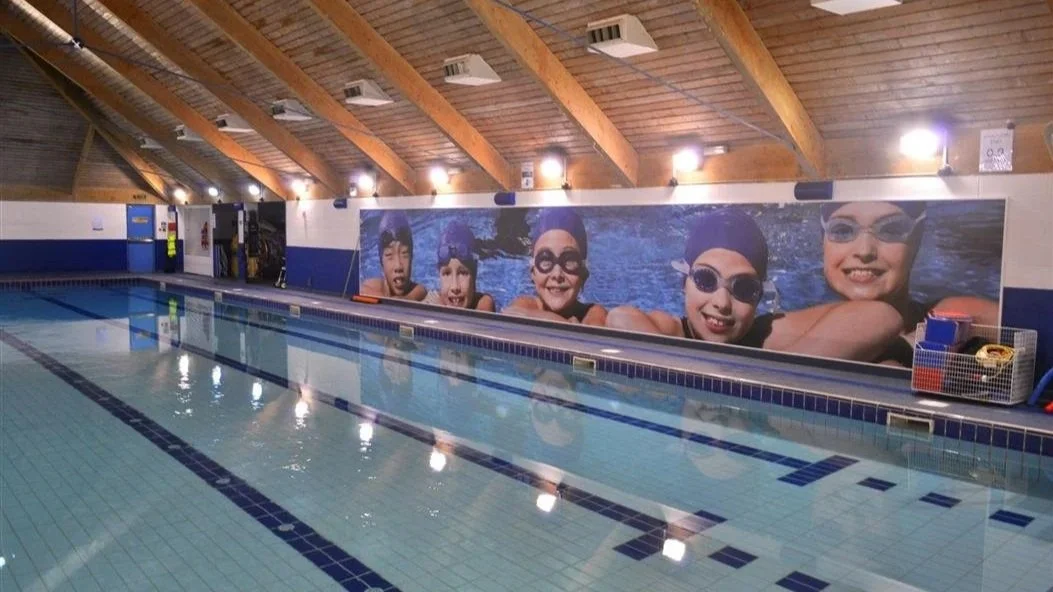
Two days before our conversation I was having one of my weekly one to one swim session with a blind 13 year old girl. As can happen, she came with a certain awkward reluctance - not very promising.
“Is there something you’d like to work on today?” I asked.
“I dunno…. what are the options?”
I found myself jumping to the conventional, what a swim teacher should be doing reply, going through the standard strokes to practise.
“I dunno - what do you think?”
After a bit more to-ing and fro-ing, she settled on giving breast stroke (her least developed) a go. She swam two widths: all rather laboured and uncoordinated, breathing arms and legs out of sync, lower body arching up when it needed to be down. And when I asked how it was for her she said:
”I dunno… not very good.”
I was at a bit of a loss to know what to suggest.
lift!
“Just give me 5 seconds” I said and did a few strokes to remind myself of the feeling (breast stroke is also not my thing!).
“How about this?” I said. “Let’s see what happens if you lift your upper body up as you press the water back and breathe. Tell yourself ‘lift’ just when you are starting to press the water back.”
And off she went - at first uncoordinated and then all of a sudden surging forward, upper body raising out of the water, breathing in rhythm with her stroke. Beautiful!
“That felt good!” she said, with a grin and giggle.
For the rest of the short session she kept practising, at times going back to the uncoordinated action and then, without any prompting from me, mid-swim, went into the more fluent and super effective stroke. She said she could feel the difference and, I could see that, when it wasn’t quite working, she somehow found her way back to what felt good.
the irreducible art
Now I’m still not sure where the ‘lift’ idea came from, other than me trying it on myself. It certainly wasn’t by me recalling the set of prescribed ‘teaching points’ we had been instructed to deliver when I did the Swim Teachers’ qualifications some years ago. In fact I suspect most Swim Teachers wouldn’t recognise it as ‘correct’ technique. So not pre-planned nor particularly clever.
Schön talked about the irreducible element of art - suggesting we can’t break ‘knowing in action’ down to a set of simple, what to do steps. But it seems to me my experience with the young swimmer highlights several interesting features that I want to hold on to and make a part of all I do.
For her, there seemed to be a knowing in her being that she felt and experienced for herself. Although the word ‘lift’ acted as a prompt, she seemed to know and be changed by what she could feel in herself as she moved through the water: body and mind as one, wholly focused on the sensation. This week, when we practised it, she said the end of the pool was coming up too fast, as if it had been shortened, such was the improvement in her speed.
And I think for me, the spontaneous, knowing in action in my efforts to support her happened when I was first attuned to myself:
aware of an initial impatience at her unresponsiveness and choosing not to let it take hold
a (belated) recognition that I’m in danger of going to what’s expected, rather than seeking out what will help
and then reconnecting to the feel of the stroke, to pass on as best I can.
And second, by being attuned to her through:
a caring, inquisitive attentiveness, all the time asking how she felt
an open minded wondering what might help, without preconceived formulas or textbook instructions
and, above all, a fundamental belief in what she can do.
Now, imagine this: what if coach education was rooted in developing our self-awareness and attentiveness to others, rather than prowess in delivering prescribed instructions? What if coaching at its best was through the skilful art of what Stephen Rollnick terms his three Cs: a ‘calm, compassionate, curious’ attentiveness to the person in front of us? I think we’d find our greatest teachers would be those we seek to support. And we might come away with a humbling but elevating sense of wondering “now, where did that come from?”
Listen out for Susan’s podcast, coming soon. And in the meantime, please use the comments box below to add any reflections of your own.
Our ‘knowing in action’ learning space