

“I don’t think we think in words. The words kind of come after the thought.”
How do we think in the moment? This post takes a quick dive into some revealing neuroscience before drawing on two insights to demonstrate the relevance to understanding and working with confidence.
The start is a bit heavy, so mind how you go.
The Body Keeps the Score
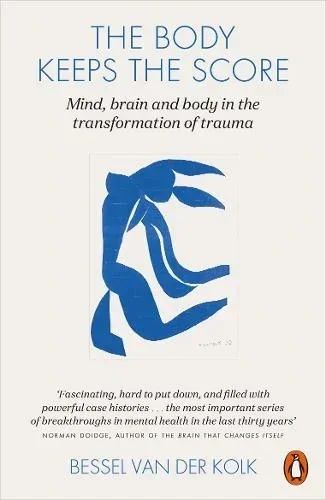
One of the most impactful books I’ve read in recent years has been Bessel van der Kolk’s classic The Body Keeps the Score. Bessel van der Kolk takes us through his search for ways of understanding and helping people who have suffered Post Traumatic Stress Disorder (PTSD). His patients’ stories are of harrowing experiences: war veterans, victims of child abuse, violence and more. Not light reading for sure, but deeply insightful.
Bessel van der Kolk reveals how the most effective treatments were those that connected the patient with what they felt in the body. For his brave yet deeply troubled patients, and in the safety of a caring, controlled therapeutic environment, they would be guided to relive - or in effect re-feel - the bodily sensations that had been experienced in the original trauma. In this way, they seemed able to put what had been felt in its place: that was then, and doesn’t need to be now.
The results were extraordinary: PTSD patients no longer held captive by harrowing flashbacks, destructive, self-harming behaviour or violent, over-blown reactions. And of special note, the results seemed to be far more effective and lasting than talking therapies based on more reasoning approaches that emphasise the words and stories we tell ourselves, such as Cognitive Behavioural Therapy.
And here’s the thing: in our much more sublime world of sports coaching, the way we talk and think about confidence, motivation and mindsets typically assumes that they belong to a thinking, reasoning space in the brain. And that the reasoning mind somehow functions separately from the body. When we, or those we coach, feel really up against it we’ll typically defer to such a split: it’s all about “mind over matter”, “mental strength”, “wanting it more”, “resilience” and “grit” as a mental tussle of reasoning over - or disregarding - what is felt.
Yet van der Kolk’s patients and the neuroscience tell us otherwise.
mind and body as one
In fact, the way our brains work is deeply rooted in sensations and feelings. Leading neuroscientist Professor Antonio Damasio shows that the part of the brain that is responsible for reasoning and for language is actually initiated by and enmeshed in signals to do with sensing. The sensing, feeling parts of the brain are first activated - and then the words come after.
“feelings... are the result of a most curious psychological arrangement that has turned the brain into the body’s captive audience.”
Imagine standing at the start line of a big event, like a marathon river swim, a long distance triathlon or a highly competitive track race. Certain reactions in our bodies instinctively happen that we might gradually become aware of: a raised pulse rate, feeling unusually cold, “butterflies” in the upper stomach, a dry mouth, a lethargy through the muscles as if somehow holding back energy for what is to come. As we become more cognisant of this mix of sensations we might find some words that express the emotions: “I’m nervous…”, “anxious…”, maybe a “I don’t know if I can do this.”
Professor Domasio breaks down the neurological detail of all that is going on in the brain as we become ‘mindful’ of such bodily sensations, demonstrating that a brain-mind-body separation is, as he calls it, a complete myth. “The mind is embodied, in the full sense of the term, not just embrained.”
Here’s a key principle of confidence-centred coaching: if we want to understand what is happening for someone around confidence we need to go to what is felt in their being: body and mind as one, not separate. And the words follow.
I might have some success in reasoning and talking things through, offering all the good reasons and strategies for changing their perception of the moment. Yet a more lasting, fundamental effect will come from the athlete seeking out and nurturing a set of deeper feelings and sensations. Beyond Belief identifies three such deeper level feelings we can make the heart of our coaching (you’ll have to get the book to find out what they are). For now, let’s turn to an illuminating example of what this means in practice.
the moment of a tackle
I recently presented an outline of confidence-centre coaching to a small networking group of coaches from across various sports. I asked them to think about the sensations at play in each of their sports - whether as an athlete or as a coach. One young apprentice football coach gave a beautiful example from his experience of making a tackle. I didn’t write down his exact words though they were essentially along these lines:
“ you might be in a match and the other team has just scored a goal or you’re thinking about how your team has to get a goal to win.
But you have to be totally in the tackle - not what happened before and what might happen in the future. Just this tackle right now.”
Take that in: of being so focused in the moment that neither the past nor future matter. In the Inner Game of Tennis Timothy Gallwey similarly writes about being so in the present moment, without a head full of instructions, that “it just happens.”
“the mind is so concentrated, so focused, that it is still. It becomes one with what the body is doing... without interference from thoughts.”
lessons from Japanese philosophy
One further insight to help us - this one from another perhaps unusual source for a blog post on sports coaching.
Julian Baggini, in a super, global tour of philosophy called How the World Thinks suggests that there is much in Japanese philosophy that challenges our conventional (that is Western) idea of a division between feeling and thinking; between the ‘affective’, concerning emotions, and the ‘cognitive’, to do with intellect. For Japanese philosophers, he says this does not mean submitting to a kind of unthinking gut reaction. Instead “[i]t is a kind of reflective selectivity, one that attempts to understand by attending carefully to what is being experienced” (emphasis added).
What a revealing phrase! I’m conscious that the idea of a feelings based approach to coaching is often misunderstood as all too vague and subjective, as if it were about the randomness of letting people follow their untamed instincts - not proper instructional coaching of techniques and tactics, telling athletes what to do. Forget about how they feel!
The kind of confidence-centred coaching I practice, aim to continuously develop and share with other coaches is one where the athlete becomes attuned to what they feel in their being: mind and body in sync. In Beyond Belief I outline this as both the coach and athlete finding a relaxed fluency, being attuned to what is happening in the moment, a relaxed alertness to what is felt - much like the football coach’s tackle, ‘mindful’ only of “what is being experienced” in that sensations rich, absorbed moment.
Imagine if we could get away from the all too typical - in truth judgemental - assumptions about confidence as something that happens all in the head (as if separate to the physical). Something that needs fixing in an athlete, if they would just listen to reason. Instead, think of coaching as much more about working alongside the athlete to help them discover how amazing it feels to find the very best of themselves (and us) in each moment. And with the words - and surprising results - following behind.
Please get in touch if you’d like to share how a sensations attuned, knowing in the body and mind as one coaching might look and feel in your coaching and the sports you practice.
Many thanks to everyone who took part and brought such richness of experience to our discussion at the Sussex Coaches Network.
And as always please add any reflections in the Comments box below.